
Mastering DEMPE Analysis: The Strategic Blueprint for Modern Transfer Pricing Value Attribution
Beyond Compliance: How DEMPE Framework Reshapes IP Value Attribution in Global Business

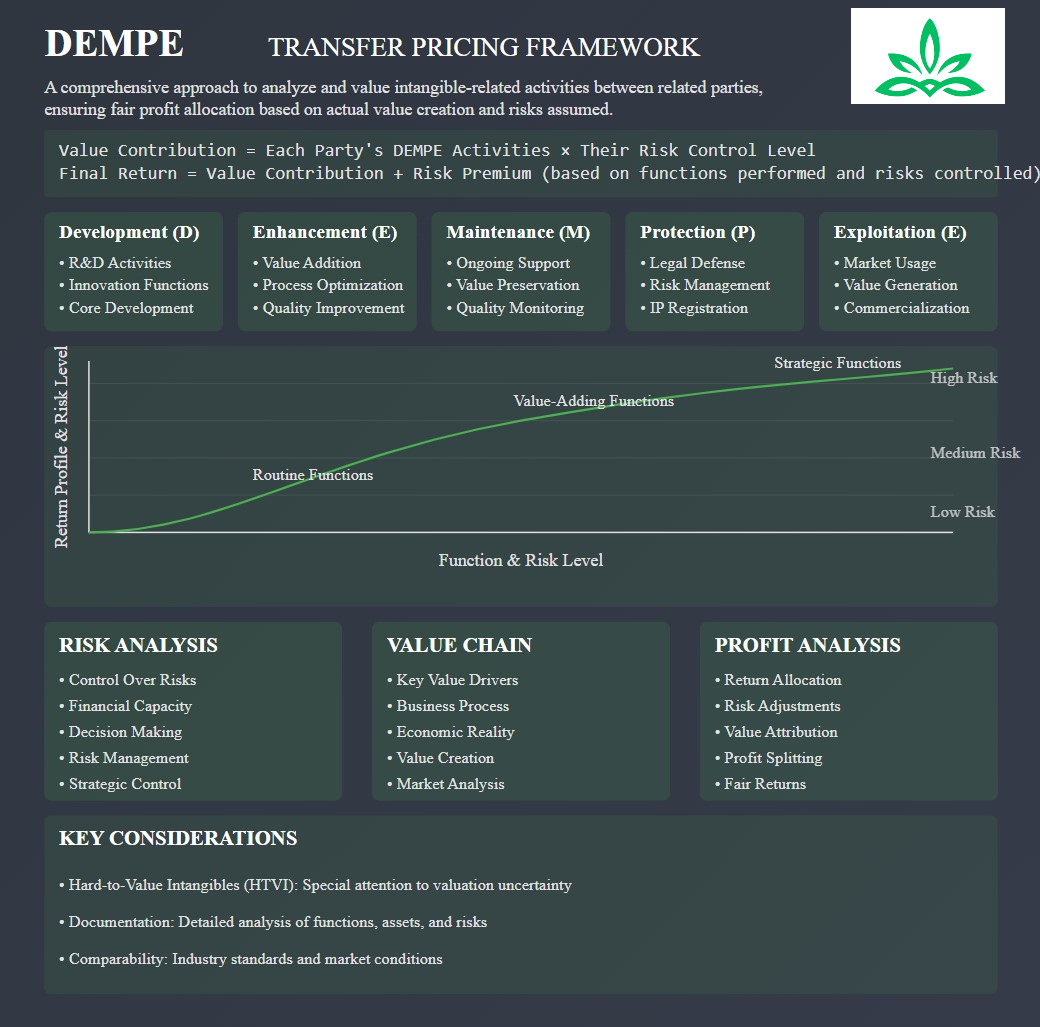
The evolution of transfer pricing in today's digital economy has made traditional cost-plus and comparable methods increasingly inadequate for capturing true value creation. DEMPE (Development, Enhancement, Maintenance, Protection, and Exploitation) analysis emerges as the cornerstone framework for understanding how multinational enterprises create, sustain, and monetize their intangible assets. But here's what many practitioners overlook: DEMPE isn't just a compliance checklist—it's a strategic value mapping tool that reveals the DNA of your intellectual property value chain.
Consider this: while most transfer pricing analyses focus heavily on the 'Development' aspect (R&D centers, tech hubs), they often undervalue the critical role of 'Enhancement' and 'Maintenance' functions. Take the case of pharmaceutical companies: while the initial drug development might happen in one jurisdiction, the ongoing stability testing, formulation improvements, and manufacturing process optimizations often create substantial value in other jurisdictions. These enhancement activities can sometimes contribute more to the long-term value of the IP than the initial development. Similarly, in the tech sector, many companies are surprised to discover that their maintenance teams in lower-cost jurisdictions aren't just "keeping the lights on"—they're actively contributing to the IP value through continuous integration, bug fixes, and performance optimizations that directly impact user experience and market value.
What sets truly sophisticated DEMPE analysis apart is its ability to capture the dynamic interplay between risk control and value creation. Far too often, transfer pricing documentation treats risk attribution as a binary exercise, where risks are simply "allocated" to entities based on contractual arrangements. However, the reality is far more nuanced. Each DEMPE function carries its own risk profile, and the same function (say, IP Protection) might have dramatically different value implications depending on the industry context and competitive landscape. For instance, in markets with aggressive patent litigation, the Protection function might contribute more to the overall value than in markets where informal know-how is the primary competitive advantage. This is why a one-size-fits-all approach to DEMPE analysis often misses the mark in capturing true economic substance.
For any query, reach out to taxandregulatory@gmail.com